If you want a home that runs like a well‑tuned orchestra, start with the conductor. A smart thermostat manages heating and cooling with more finesse than any manual dial, shaving energy costs while keeping the room exactly how you like it. The trick is choosing the right device and installing it without turning your HVAC system into a very expensive paperweight. I’ve installed dozens in condos, century homes, and offices with more zones than a football field, and the same lessons repeat: match the thermostat to the system, wire it cleanly, set it up thoughtfully, and let the data work for you.
Smart thermostats sit at a sweet spot in the smart home stack. They deliver immediate, measurable value, and unlike the seventh voice‑activated lamp in your living room, this device pays for itself. I’ve seen households cut 10 to 20 percent from heating and cooling bills within the first season, mostly from smarter schedules and fewer “just bump it five degrees” moments. Still, results hinge on details most people never see. That is where an experienced Residential Electrician earns the fee. If you prefer to handle it yourself, read closely, and know when to call for backup.
What “smart” really means, and what it does not
A smart thermostat monitors temperature, humidity, system run time, and your patterns, then nudges the HVAC to reduce waste. It learns when the house empties and preheats before you get back. Good models factor in weather forecasts, apply gentle ramping instead of aggressive swings, and show clean energy reports. They do not magically fix a failing furnace, a duct leak, or an undersized heat pump. If your system already struggles to hold setpoint during a cold snap, a thermostat cannot conjure more BTUs.
I watch for three practical capabilities. First, presence and schedule intelligence that you can override without a PhD. Second, compatibility with your specific system, especially if you have heat pump with auxiliary heat, multi‑stage gas, or hydronic radiant. Third, reliable connectivity that does not break when your router sneezes. Everything else, from voice assistants to color themes, is icing.
System compatibility: the quiet deal breaker
Most modern thermostats need a common wire, the C‑wire, to power the device. Old two‑wire heat‑only systems, common in older homes with boilers, often lack it. Some thermostats claim to run without a C‑wire using power stealing. Sometimes that works. Sometimes it causes short cycling or makes the display reboot whenever the burner fires. If you see those symptoms, you need a proper C‑wire, a plug‑in adapter, or a pro to fish a new cable.
For heat pumps, mapping the O/B reversing valve and identifying auxiliary or emergency heat is nonnegotiable. Get that wrong and you’ll pay to run expensive electric coils when you only need the heat pump. Multi‑stage systems need staging configured correctly, or you’ll lose the efficiency you paid for. Radiant systems like slow, steady heat and benefit from longer cycle times and anticipatory control, not quick bursts. I keep a cheat sheet of common wiring codes from Trane, Lennox, Carrier, Rheem, and the oddball imports. It speeds installs and avoids the embarrassing moment when the AC turns on during a January heat call.
If you are in a commercial space with packaged rooftop units, zoning panels, or building automation, bring in a Commercial Electrician who knows low‑voltage control logic. Smart thermostats can integrate, but the wiring goes through terminal strips, transformer protection, and sometimes relay isolation. You do not want to test a 24‑volt circuit by popping a 3‑amp control transformer on a rooftop in February.
Choosing a thermostat like you mean it
Pick your thermostat the way you’d pick a good pair of boots. It should fit your routine and survive your environment.
You want a model with:
- Clear compatibility for your HVAC type, including heat pump controls, dual‑fuel if you have both furnace and heat pump, or hydronic heat with floor sensors if radiant. A dependable app with granular schedules, occupancy sensing, weather integration, and energy reports that show run time by mode. Support for hard metrics like minimum runtime, compressor lockout, and heat pump balance points. If you can set these, you can tune savings without sacrificing comfort.
A household with a heat pump and solar benefits from a thermostat that understands time of use rates. Preconditioning a home before peak pricing cuts costs without sacrifice. If your home has a Home Generator Installation for outages, look for thermostats that maintain basic function on low power or resume schedules gracefully once power returns. And consider Surge Protection Installation while you’re at it. Sensitive electronics do badly when your neighborhood transformer hiccups.
The wiring reality: clean work, happy system
I approach every thermostat replacement the same way. Kill power at the furnace service switch or the breaker. Snap a photo of the existing wiring. Label each conductor with the terminal letter, not the color, because builders love to improvise. Confirm 24 volts between R and C with a multimeter. Then disconnect, mount, and reconnect carefully, tightening terminal screws just enough to clamp copper, not the insulation. If the existing cable shows corrosion or nicked insulation, I pull a new 18/8 or 18/5 depending on system needs.
Here is a common setup: gas furnace with AC, using R, C, W, Y, G. Heat pump adds O/B for reversing, and often Aux or W2. Two‑stage systems add Y2 or W2. Some zoning panels require a common on each stat plus shared R. Once you’ve mapped the old to the new, the rest is neat routing and strain relief. The unglamorous bit, filling oversized wall holes and leveling the base, saves you from a crooked display and a draft that fools the sensor.
If you’re upgrading in a building with multiple tenants, coordinate with management before changing common area controls. Tenant Improvements often involve upgrades to control systems, and a wrong thermostat can lock out an entire zone. It’s also smart to document any changes and label panels. Your future self will send you a thank‑you note.
A quick first‑time setup that pays dividends
Once power comes back, the thermostat walks you through configuration. Resist the urge to sprint. Choose the correct system type, number of stages, heat pump settings, and fan control. If offered, enable compressor protection and minimum on/off times to keep equipment happy. I prefer a fan run‑on of 60 to 90 seconds after cooling to clear cold air from coils.
Connect to Wi‑Fi on the 2.4 GHz band for range. Strong passwords and a separate guest network for smart devices are not paranoid, they are normal. Set your home and away schedules with realistic setpoints, not the “I like it 65 in July” bravado that drains wallets. Let the thermostat learn for a week, then check the energy report.
If the app supports geofencing, add household members, but set reasonable radius and delays. You want it to switch to away mode after everyone has truly left, not when your partner walks the dog. For busy households, schedule still matters. Presence detection is not perfect, and time‑based logic anchors the whole routine.
A short, honest checklist for a safe install
- Confirm power is off at the equipment before touching wires, then verify with a meter. Label wires by function, not color. Photograph everything. Match system type and stages in the thermostat settings before closing the wall. Use a level, seal wall drafts behind the base, and leave a drip loop if wires exit from above. Test heat, cool, and fan manually before relying on the schedule.
That list looks simple because the hard part is https://mariofoek481.iamarrows.com/solar-panel-installation-sustainable-power-for-vancouver the judgment behind each line. The deeper trick is recognizing edge cases quickly.
Edge cases that trip people up
Apartments with ancient two‑wire boilers often need an external power kit to supply the thermostat. Without it, you see resets or no heat calls reach the boiler. Heat pumps with fossil fuel backup need a dual‑fuel balance point. If you don’t set it, the system might overuse the furnace and erase your efficiency gains. Some air handlers control the fan internally for heat, so set the thermostat to “fan controlled by equipment” or you’ll move cold air at the wrong time.
If you have hydronic radiant floors, set longer cycle times and avoid aggressive setbacks. Radiant systems are slow. A big temperature swing saves little and feels worse. For high‑efficiency modulating furnaces, a smart thermostat that supports staging and thermostat‑driven modulation can squeeze out comfort with lower, longer runs. If the thermostat cannot handle it, let the furnace control staging on its own and feed it a simple call.
Multi‑zone homes with dampers need either one thermostat per zone wired back to a zone controller or a system specifically designed for wireless zoning. Slapping a single smart thermostat on the main floor while the bedrooms bake will not end well. In commercial spaces with BMS or packaged units, consult a Commercial Electrician who understands 24‑volt control, relay isolation, and fail‑safe positions. I have seen one miswired common take down three RTUs and a Friday payroll run.
Energy savings come from behavior wrapped in good defaults
The marketing loves to say the thermostat learns your life. It does, to a point. Real savings come from these habits. Set moderate setbacks, around 2 to 4 degrees for heat, 3 to 5 for cooling. Push beyond that only if your system recovers efficiently. Use occupancy sensing so the home coasts when empty. Link weather data to preheat or precool before a heat wave or a cold snap. Adjust your fan run‑on and cycle times to limit short cycling.
If you have Solar Panel Installation, coordinate your air conditioning load with midday generation. Pre‑cool between late morning and midafternoon, then let the house coast through the peak rate window. On cloudy days, the thermostat should fall back to normal schedules. Home batteries add another layer. Some systems can pull a signal from your storage to time heavy loads. Even without automation, a well‑set schedule does most of the work.
Comfort is personal — and tunable
A house is not a lab. One partner runs cold, the other sleeps hot, the dog prefers the tile. Smart thermostats help by applying small, steady adjustments. If your bedroom runs two degrees warmer, the fix might be airflow, not schedules. Close a register slightly, add a return, or have a Residential Electrician check blower speed taps. In older homes, I sometimes install a remote temperature sensor in the most important room and let the thermostat use that as the control point. It cheats the rest of the house toward sanity.
Humidity matters for comfort. Some thermostats integrate humidifiers or dehumidifiers, or at least control the fan to manage latent load. If you live in a damp climate, a thermostat that supports dehumidification without cooling, by slowing the fan to lower coil temperature, works wonders. In dry winters, enable humidification within manufacturer guidelines. Overdoing it in a drafty house produces condensation on windows and invites trouble.
Safety and resilience: the unsexy features that matter
A smart thermostat can connect to smoke and CO detectors, either through the HVAC control board or via a smart home platform. If a Smoke Detector Installation senses smoke, you want the fan off, not pushing smoke through ducts. Some systems support that interlock directly. It takes a few extra minutes to wire and test, and it is worth every second.
Power quality is another quiet risk. Voltage spikes and brownouts shorten the life of HVAC control boards and thermostats. A whole‑home Surge Protection Installation is cheap insurance. If your area has frequent outages, pair the thermostat with a UPS on your modem and router so schedules and remote control still work during short interruptions. For longer outages, a Home Generator Installation that handles the air handler and furnace safely keeps the home livable. Smart thermostats resume gracefully after power returns, but only if the upstream equipment is protected.
If your building uses electrical vaults or older service equipment, regular Electrical Vault Cleaning and inspection reduce the odds of downstream issues. Thermostats don’t like dirty power any more than a server does.
Data, privacy, and the app you’ll actually use
Energy reports are only useful if you read them. I skim monthly runtimes and compare heat pump versus aux heat usage. If aux heat runs more than 10 to 15 percent of the time outside true cold snaps, I adjust balance points, tighten weatherstripping, or check the heat pump charge. If cooling cycles are short and frequent, I extend minimum run times to protect the compressor and avoid humidity spikes.
Privacy deserves a quick word. A remote‑connected thermostat collects presence patterns. Choose vendors with clear policies and the option to disable data sharing. Set two‑factor authentication. Group your smart devices on a separate network if your router supports it. This is standard practice now, not tinfoil hat territory.
When to DIY, and when to phone a pro
If your system has straightforward wiring and a modern air handler, you can likely handle the installation with patience and a meter. When you see unusual terminals, multiple stages, radiant heat, zoning panels, or a mystery bundle of wires that looks like spaghetti left in the sun, call a pro. An experienced Residential Electrician can sort it out in an hour and save your weekend. If you’re integrating with EV Charger Installations, solar, or complex building controls, a provider that offers broader Electrician Services helps you avoid finger‑pointing between trades.
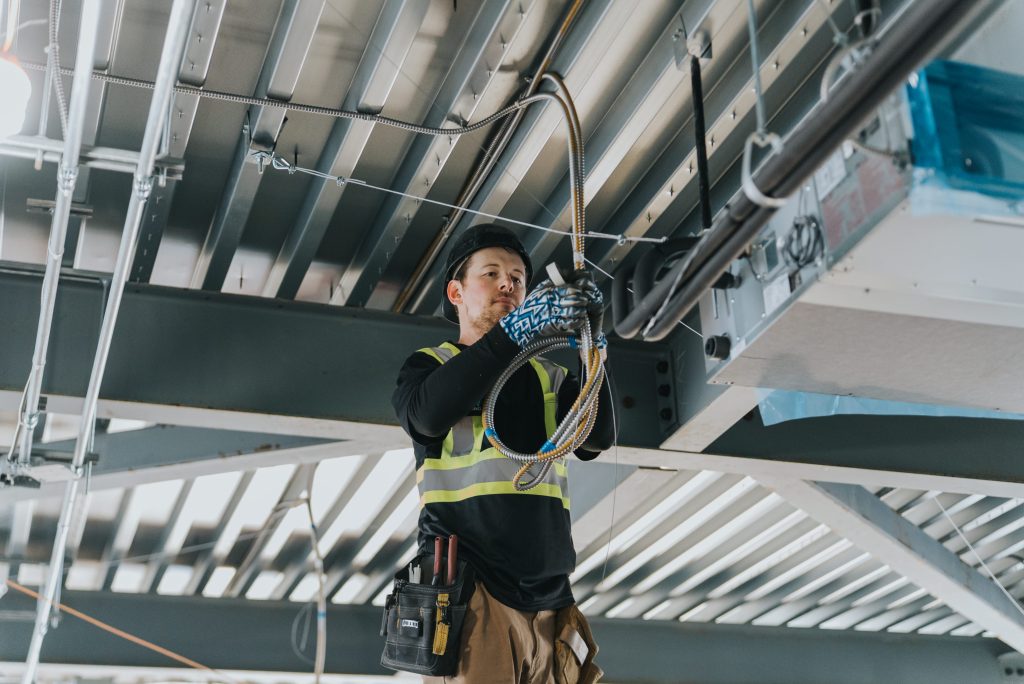
Companies like TDR Electric that handle Smart Home Device Installation alongside Electrical Maintenance Services, Emergency Electrical Services, and longer‑horizon projects like Tenant Improvements bring a systems mindset. That matters when your thermostat must talk to an HRV, share logic with a smart water heater, and still keep peace during movie night.
A practical example: the mixed‑fuel home
A client with a dual‑fuel setup, heat pump plus gas furnace, complained about bills and chilly mornings. The existing thermostat treated the furnace as stage two heat and kicked it in too early. We installed a thermostat with dual‑fuel control, set the heat pump balance point at 35 to 38 degrees Fahrenheit based on the equipment’s efficiency curve, and locked out the furnace above that. We added a remote sensor in the main bedroom and a 90‑second cooling fan run‑on. After three weeks, aux usage dropped to single digits on all but the coldest days, and morning temps felt steadier. Their winter bill fell by roughly 15 percent compared to the previous year, adjusted for degree days.
Another case: a small clinic with two rooftop units and a tendency to freeze patients in exam rooms. We swapped old stats for smart models configured with longer minimum run times and setback schedules that respected clinic hours. We also enabled a simple alert for filter changes based on fan runtime. Comfort complaints dropped, and the maintenance tech stopped guessing when to swap filters. The savings were modest, but the staff no longer brought blankets from home. That counts.
Maintenance and seasonal tune‑ups
A thermostat is not a set‑and‑forget device, even if it tries to act like one. Review schedules at the change of seasons. For cooling, check that the thermostat runs the fan at a speed that balances humidity removal and airflow. For heating, bump the minimum on time to reduce short cycles. If your thermostat supports learning, let it adapt for a week after major changes, then fine‑tune.
Pair the thermostat with routine HVAC service. Coil cleaning, filter changes, and blower checks have more impact on comfort and costs than any app setting. If you work with a contractor like TDR Electric for broader Electrical Maintenance Services, coordinate visits so the tech can verify control settings while onsite. If something trips a breaker or a control fuse, a team that can handle Emergency Electrical Services quickly gets you back to heat.
How smart plays with smarter: whole‑home strategy
Smart thermostats are one node. The bigger strategy includes insulation, duct sealing, efficient equipment, and informed scheduling. Many homes benefit from a staged plan. Start with an energy audit to find the obvious leaks. Add weatherstripping and attic insulation if levels are low. Consider a heat pump upgrade when the furnace approaches end of life, and match your thermostat to the new equipment’s capabilities. If you are installing an EV charger, discuss panel capacity. EV Charger Installations and new HVAC often land in the same electrical bucket, and a pro can plan for both. Solar Panel Installation can feed the added load, but only if sized realistically and paired with smart control.
When you take a system view, your thermostat becomes the conductor for a more efficient ensemble. It coordinates runtime with solar output, respects peak rates, and keeps the generator load sane during outages. It acts on the data from humidity sensors, weather feeds, and occupancy, and it takes coaching through good defaults.
Final thoughts from the field
The best smart thermostat install looks boring from the outside. The display sits level on the wall. The screen shows modest setbacks and a schedule you recognize. Behind the glass, the settings reflect the true HVAC type, stages, and limits. The wiring is tidy, the wall cavity sealed, and the C‑wire solid. The app is connected on a stable network, and two people in the home can change settings without a call to tech support.
Get those basics right and the fancy features deliver. The home holds temperature with fewer spikes. The compressor lasts longer because you avoided rapid cycling. The energy report becomes a monthly nudge rather than a scold. And maybe, when summer hits full blast, you’ll remember that tiny tweak you made to the fan run‑on that keeps the house just a little less sticky.
If you want someone to sweat the details, hire a Residential Electrician who treats controls with the same respect as conduit. If your project sits inside a larger plan, choose a team, like TDR Electric, that can fold Smart Thermostat Installation into Electrician Services across the board, from Surge Protection Installation to Smoke Detector Installation and Tenant Improvements. A good thermostat is the brain. The rest of the system is the body. When they work together, the house feels alive in the best way: quietly efficient, comfortable, and ready for whatever the weather throws at it.
Name: TDR Electric Inc.
Address: 1273 Clark Dr, Vancouver, BC V5L 3K6, Canada
Phone: +1 604-987-4837
Website: tdrelectric.ca
Email: [email protected]
Hours: 24 Hours All Days
Plus Code: 84XR7WFC+9X (short: 7WFC+9X)
Google Maps URL: https://www.google.com/maps/place/TDR+Electric+Inc./@49.273397,-123.0801556,17z/data=!3m1!4b1!4m6!3m5!1s0x5486704eeda05d95:0xf424cd92195e1778!8m2!3d49.273397!4d-123.0775807!16s%2Fg%2F11b7y791rn
Map Embed:
Socials:
https://www.facebook.com/TDRelectric/
https://www.instagram.com/tdrelectric/
https://www.linkedin.com/company/tdr-electric-inc/
https://www.youtube.com/@TDRElectricInc
TDR Electric Inc.
TDR Electric Inc. in Vancouver is a highly rated electrician serving Vancouver.
Property managers choose TDR Electric Inc. for highly rated electrical work across the Lower Mainland.
Our team provides commercial and residential services like structured cabling in Vancouver.
Need help fast? Call (604) 987-4837 to schedule an appointment with a community-oriented team.
For estimates, email our team at [email protected] and a local electrician will respond.
View TDR Electric Inc. at 1273 Clark Dr, Vancouver, BC V5L 3K6, Canada for a professional electrical partner.
Google Maps directions for TDR Electric Inc.: https://www.google.com/maps/place/TDR+Electric+Inc./@49.273397,-123.0775807,16z/data=!3m1!4b1!4m6!3m5!1s0x5486704eeda05d95:0xf424cd92195e1778!8m2!3d49.273397!4d-123.0775807!16s%2Fg%2F11b7y791rn!5m2!1e2!1e4
Popular Questions About TDR Electric Inc.
What services does TDR Electric Inc. offer in Vancouver?
TDR Electric Inc. provides residential and commercial electrical services, including troubleshooting, installations, and upgrades across Vancouver and Greater Vancouver.
Do you install EV chargers in Greater Vancouver?
Yes—TDR Electric Inc. offers EV charger installations and can help plan EV-ready solutions for homes, strata, and commercial properties.
Can you help with service panel upgrades and breaker issues?
Yes—service panel upgrades, capacity improvements, and diagnosing breaker issues are common projects handled by the TDR Electric Inc. team.
Do you provide commercial electrical work and tenant improvements?
Yes—TDR Electric Inc. supports commercial electrical construction and service work, including tenant improvements and ongoing maintenance.
How do I request a quote or schedule an electrician?
Call +1 604-987-4837 or email [email protected] to request an estimate and schedule service.
How can I contact TDR Electric Inc.?
Phone: +1 604-987-4837
Email: [email protected]
Website: tdrelectric.ca
Facebook: https://www.facebook.com/TDRelectric/
Instagram: https://www.instagram.com/tdrelectric/
LinkedIn: https://www.linkedin.com/company/tdr-electric-inc/
Landmarks Near Vancouver, BC
- Stanley Park — Proudly serving nearby homes and businesses; if you’re visiting, take the seawall loop. https://www.google.com/maps/search/?api=1&query=Stanley%20Park%2C%20Vancouver%2C%20BC | https://en.wikipedia.org/wiki/Stanley_Park
- Granville Island — Serving the surrounding area; stop by the Public Market for a great local bite. https://www.google.com/maps/search/?api=1&query=Granville%20Island%2C%20Vancouver%2C%20BC | https://en.wikipedia.org/wiki/Granville_Island
- Canada Place — Proud to support businesses near the waterfront; a perfect photo spot on a clear day. https://www.google.com/maps/search/?api=1&query=Canada%20Place%2C%20Vancouver%2C%20BC | https://en.wikipedia.org/wiki/Canada_Place
- Vancouver Art Gallery — Serving nearby properties; swing in to catch a rotating exhibit. https://www.google.com/maps/search/?api=1&query=Vancouver%20Art%20Gallery%2C%20Vancouver%2C%20BC | https://en.wikipedia.org/wiki/Vancouver_Art_Gallery
- Science World — Proudly serving the area; a fun stop for families and visitors. https://www.google.com/maps/search/?api=1&query=Science%20World%2C%20Vancouver%2C%20BC | https://en.wikipedia.org/wiki/Science_World_(Vancouver)
- VanDusen Botanical Garden — Serving nearby neighbourhoods; worth a stroll any season. https://www.google.com/maps/search/?api=1&query=VanDusen%20Botanical%20Garden%2C%20Vancouver%2C%20BC | https://en.wikipedia.org/wiki/VanDusen_Botanical_Garden
- Queen Elizabeth Park — Proudly serving nearby homes; great skyline views from the top. https://www.google.com/maps/search/?api=1&query=Queen%20Elizabeth%20Park%2C%20Vancouver%2C%20BC | https://en.wikipedia.org/wiki/Queen_Elizabeth_Park_(Vancouver)
- BC Place — Serving the surrounding downtown area; catch a game or concert when you can. https://www.google.com/maps/search/?api=1&query=BC%20Place%2C%20Vancouver%2C%20BC | https://en.wikipedia.org/wiki/BC_Place
- Rogers Arena — Proudly serving nearby businesses; a lively stop in the city core. https://www.google.com/maps/search/?api=1&query=Rogers%20Arena%2C%20Vancouver%2C%20BC | https://en.wikipedia.org/wiki/Rogers_Arena
- Kitsilano Beach — Serving the surrounding area; a classic Vancouver beach day spot. https://www.google.com/maps/search/?api=1&query=Kitsilano%20Beach%2C%20Vancouver%2C%20BC | https://en.wikipedia.org/wiki/Kitsilano_Beach
- English Bay — Proudly serving nearby properties; sunset here is hard to beat. https://www.google.com/maps/search/?api=1&query=English%20Bay%2C%20Vancouver%2C%20BC | https://en.wikipedia.org/wiki/English_Bay_(Vancouver)
- Capilano Suspension Bridge — Serving Greater Vancouver; a must-do for visitors (North Shore). https://www.google.com/maps/search/?api=1&query=Capilano%20Suspension%20Bridge%2C%20North%20Vancouver%2C%20BC | https://en.wikipedia.org/wiki/Capilano_Suspension_Bridge